



My Transformative Journey in Xinjiang: Where Science and Friendship Flourished
Dana Shokparova, Al-Farabi Kazakh National University
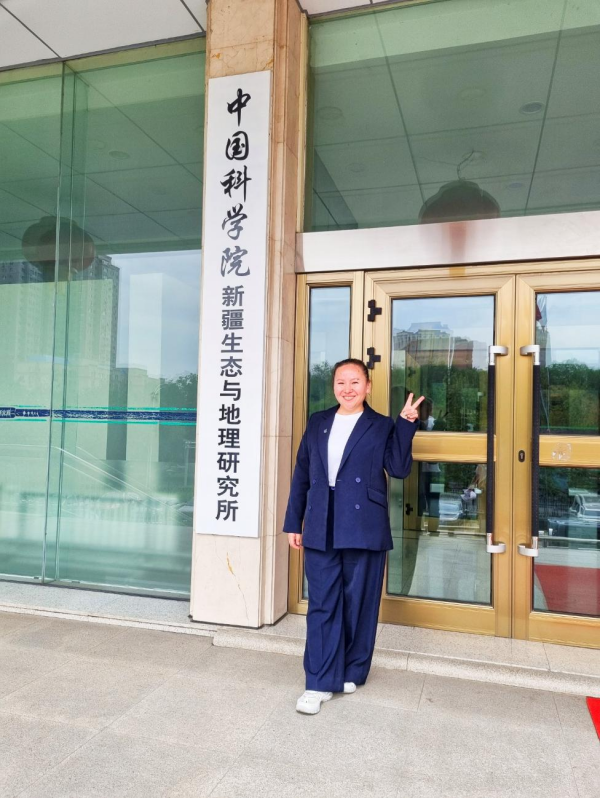
From February to August 2025, I had the privilege of implementing the CAS-ANSO Fellowship program at the Xinjiang Institute of Ecology and Geography (XIEG) of the Chinese Academy of Sciences (CAS) . When I first got accepted into the CAS-ANSO Fellowship program, I had no idea how much this experience would change me - both as a scientist and as a person. This period was not only a professional breakthrough for me but also a deep immersion into Chinese culture, particularly in the Xinjiang Uygur Autonomous Region, where ancient traditions intertwine with modern science.
Scientific Discoveries and Collaboration
Working alongside Prof. Jilili's dedicated team at XIEG challenged me in the best possible way. I was immediately drawn to pressing topics such as land degradation, desertification, drought, and land cover changes. The research on flood-related challenges was particularly eye-opening—far more complex and multifaceted than I had anticipated.
Over the months, I delved deeper into these subjects and achieved tangible results. Jointly with colleagues, I prepared and submitted scientific articles for publication in journals indexed in international databases. My knowledge of arid land ecology expanded significantly, and I mastered advanced GIS technologies, remote sensing methods, and application of machine learning for data analysis and verification.
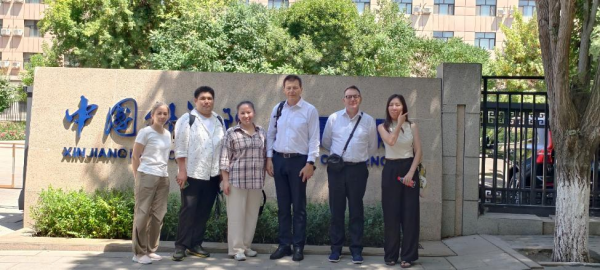
One of the highlights was the visit from a delegation of Al-Farabi Kazakh National University, where we discussed collaboration prospects between the two institutions. This opened doors to new joint projects and knowledge exchange. Seeing my first paper accepted, watching our Kazakh-Chinese research partnerships take shape during the Al-Farabi University delegation visit - these were milestones I'll always cherish.
Cultural Experiences: From Museums to Mountain Landscapes
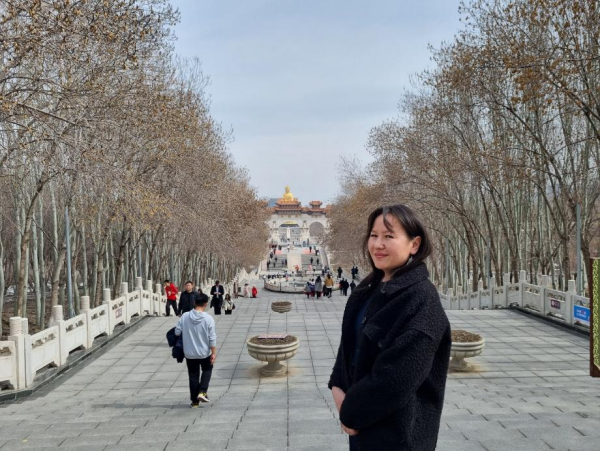
Xinjiang is not just about science—it is also home to a remarkable culture that left an indelible mark on me. In my free time, I explored local museums and cultural centers. The Xinjiang Natural Museum at XIEG stood out, with its unique exhibits showcasing the region’s geological and ecological diversity.
Another unforgettable experience was my trip to Altay City, where I participated in a scientific conference and signed an important agreement. Altay’s breathtaking landscapes—endless steppes, snow-capped mountains, and crystal-clear lakes—felt like stepping into another world.
Immersing myself in Xinjiang’s multicultural environment taught me to appreciate diverse traditions and work approaches. I became more adaptable in communication, learning to connect with colleagues from different countries and cultures. Participation in the institute’s informal events helped me develop leadership skills and teamwork abilities.
New Friends and Culinary Discoveries
China is renowned for its hospitality, and Xinjiang was no exception. Thanks to new friends from Central Asia and Africa, I discovered Uygur cuisine and formed lasting connections. Meals at Uygur restaurants—featuring fragrant pilaf, succulent kebabs, and freshly baked nang—were a culinary revelation. Tea gatherings with colleagues after work turned into heartfelt conversations about life, science, and future plans.
One of the most touching moments was attending the graduation ceremony of XIEG. The institute's graduation ceremony remains particularly special. As I watched beaming students receive their diplomas, I realized I wasn't just an observer anymore - I had become part of this academic family.
Gratitude That Goes Beyond Words
I would thank the CAS-ANSO Fellowship program team for seeing potential in me. Special thanks to Prof. Jilili Abuduwaili and my colleagues for their support, invaluable knowledge, and warm welcome, that your patience in explaining complex concepts and willingness to share both your knowledge and your culture means more than I can express.
This experience taught me that scientific collaboration isn't just about data and publications - it's about the human connections that make the work meaningful. The skills I gained, the perspectives I acquired, and the friendships I formed have already shaped my research approach back home in Kazakhstan.
For future participants: come with an open heart as well as a sharp mind. Xinjiang has a way of changing people.
I am confident this collaboration is just the beginning of a long and fruitful journey.
- Appendix
-