



Life and Work in China: An Unforgettable Experience at XIEG
SanimBissenbayeva, Al-Farabi Kazakh National University
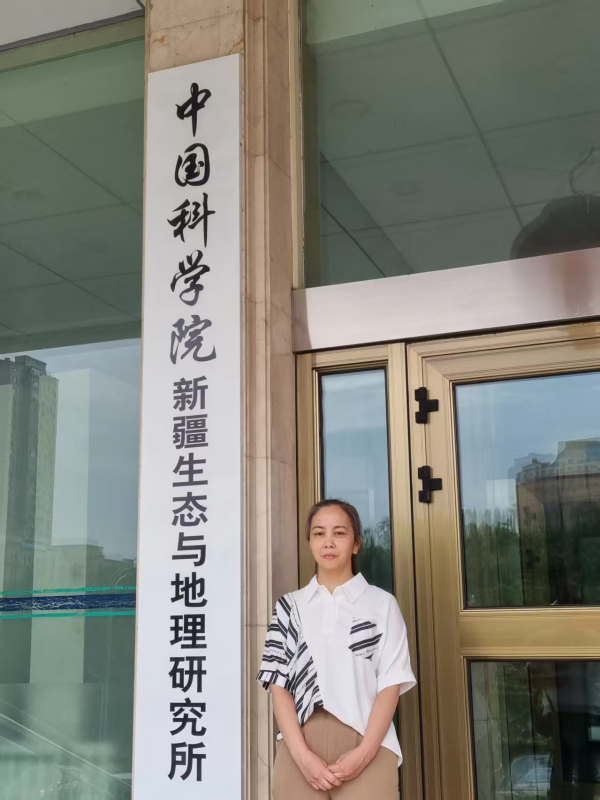
From February 19 to August 12, 2025, I had the incredible opportunity to complete the CAS-ANSO Fellowship program as a visiting scientist at the Xinjiang Institute of Ecology and Geography (XIEG) of the Chinese Academy of Sciences (CAS)—one of China’s leading research institutions, located in the picturesque city of Urumqi. It was a time of intense work, fascinating discoveries, and deep immersion in the culture of Xinjiang—a region where Eastern and Central Asian traditions intertwine.
Scientific Work
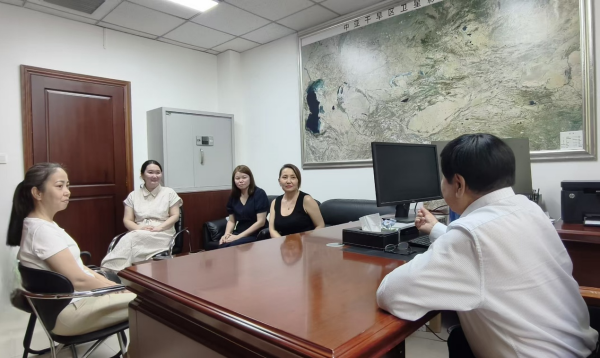
From 19 February to 12 August 2025, I had the good fortune to participate in the CAS-ANSO Fellowship program under the leadership of Professor Jilili Abuduwaili in Urumqi, China. This period was a time of intensive scientific work for me, familiarisation with cutting-edge research, and immersion in the international academic environment. The institute impressed me with its modern laboratories, high-tech equipment, and a welcoming atmosphere where everyone was eager to help and share knowledge. I had the chance to work with several research groups studying climate change, land desertification, and regional biodiversity.
My main tasks included:
- Studying the institute’s activities and projects,
- Data analysis and scientific writing,
- Participating in discussions with colleagues.
The result was three research papers: one already published, the second under review, and the third in the submission stage. This was an invaluable experience that significantly enhanced my professional skills.
Writing these papers required not only data analysis but also close collaboration with Chinese colleagues. Despite the language barrier (my Chinese was basic), we found ways to communicate—sometimes with a translator, sometimes in English, and often simply through our shared passion for science.
Cultural Immersion
Outside the office, I was met with endless discoveries. Xinjiang is a unique region where Chinese, Central Asian, and Middle Eastern cultures blend seamlessly.
The museums of Ürümqi unveiled the rich history of the Silk Road. The traditional Uyghur neighborhoods, with their vibrant bazaars and the aroma of freshly baked nan bread, became my favorite places to explore. Festivals like Nowruz allowed me to experience the hospitality of the local people.
Some of my most cherished memories were the moments spent with new friends—both Chinese and international scientists. Together, we explored the surroundings and tried the famous pilaf.
China is a country where respect for tradition walks hand in hand with innovation. I was amazed by how deeply traditions are honored—from Chinese New Year celebrations to tea ceremonies—while simultaneously embracing progress, from digital payments to high-speed trains and smart cities.
My Key Takeaways
The CAS-ANSO Fellowship program gave me not only scientific experience but also a profound understanding of Chinese culture. I left with not just publications, but also memories of Xinjiang’s hospitality, breathtaking nature, and the warmth of human connections.
China taught me a valuable lesson: wherever you are—whether in a lab, a bustling market, or the Tianshan mountains—staying open to the world is essential. I witnessed how science bridges cultures, the importance of preserving nature, and how rich life can be far from home. I would like to thank the CAS-ANSO Fellowship Program, Xinjiang Institute of Ecology and Geography, and Prof. Jilili Abuduwaili for support and guidance. I look forward to future collaborations with the Chinese Academy of Sciences.
- Appendix
-