



Bridging the Aral Sea and the Tianshan Mountains: My CAS-ANSO Alumni Fellowship Journey
Elena Aleksandrovna Bykova
Institute of Zoology, Academy of Sciences of the Republic of Uzbekistan
The Chinese Academy of Sciences - Alliance of National and International Science Organizations (CAS-ANSO) Alumni Fellowship has been a truly transformative experience, allowing me to transform a long-standing desire for collaboration between the Institute of Zoology of the Uzbekistan Academy of Sciences and the Xinjiang Institute of Ecology and Geography (XIEG) of CAS into a concrete, forward-looking partnership. My 10-day visit to Urumqi in November 2024 was not merely an academic mission; it was a journey into the heart of Central Asian ecology, guided by the warmth and expertise of my host, Prof. YANG Weikang.
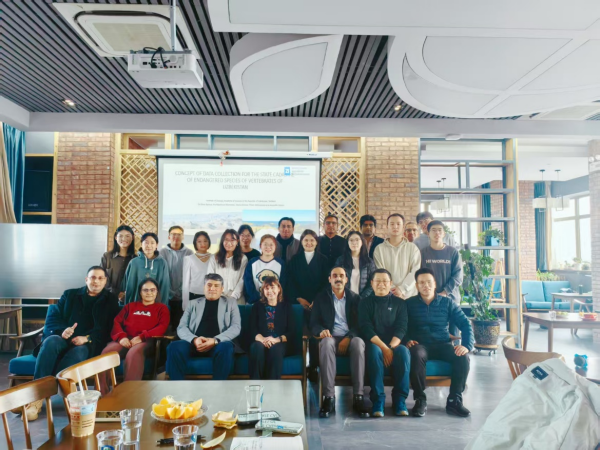
What struck me most was the immediate intellectual synergy. In one of our seminars, I presented our work on large mammal conservation in Uzbekistan’s challenging arid zones. Immediately, the graduate students from Prof. YANG’s team showed with the study about Siberian ibex (Capra sibirica). The exchange was electric. We didn’t just share successes; we dived deep into shared challenges, from standardized data collection protocols across borders to innovative, low-cost methods like estimating populations through white stork (Ciconia ciconia) nest counts. These exchanges were the bedrock on which we built a joint manuscript to identify conservation priority areas for Central Asian ungulates, a project that perfectly embodies the spirit of the ANSO fellowship.
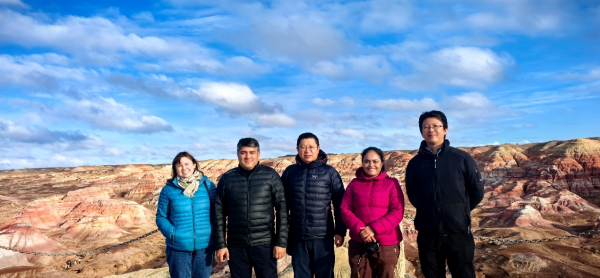
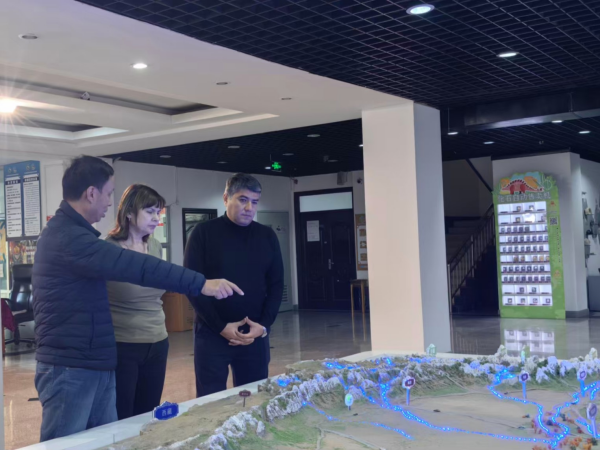
Beyond the seminar, the fellowship came alive in the field. Participating in their field survey gave me a tactile understanding of Xinjiang’s arid area conservation approaches. Visiting the Xinjiang Natural Museum was another highlight, offering a panoramic view of the region’s biodiversity. But the most profound moments were the quiet ones: sharing a simple meal after a long day in the field, or discussing the ecology of the Aral Sea region while looking out over the vast, dry landscapes of Xinjiang. I realized our lands, and our challenges, are deeply connected.
This fellowship also opened my eyes to the global vision of the CAS and ANSO. I learned how CAS is supporting the green development of the Belt and Road Initiative, and how ANSO is building transnational platforms for science. I returned to Uzbekistan not just with a co-authored manuscript in progress, but with a study plan. We have identified specific pathways for joint research proposals, reciprocal student exchanges, and sharing technical expertise.
The CAS-ANSO Alumni Fellowship has done more than strengthen institutional ties; it has built a bridge of trust between two teams working to save some of the world’s most unique wildlife. I am deeply grateful for the generous support and the unforgettable hospitality. I now eagerly await the day I can welcome Prof. YANG and his team to Uzbekistan, to show them our landscapes and continue our shared work for the green future of Central Asia.
- Appendix
-