



Inaugural Meeting of the Academic Committee and First Academic Symposium of the China-Tajikistan Belt and Road Joint Laboratory on Biodiversity Conservation and Sustainable Use Successfully Held
2026-01-19
The Inaugural Meeting of the Academic Committee and the First Academic Symposium of the China-Tajikistan Belt and Road Joint Laboratory on Biodiversity Conservation and Sustainable Use (the “Joint Laboratory”) were successfully held in Urumqi on January 14. The event brought together more than 100 participants, including researchers, governmental representatives, administrative staff, and students from China, Tajikistan, Kazakhstan, Uzbekistan, Turkmenistan, Germany, Spain, and other countries. Academicians MA Keping, WEI Fuwen, and SUN Hang of the Chinese Academy of Sciences (CAS), as well as Academicians Hikmat Hisoriev and Abdusattor Saidov of the National Academy of Sciences of Tajikistan, were specially invited to attend the event.
The Inaugural Meeting of the Academic Committee was presided over by Prof. YANG Weikang, Deputy Head of the Joint Laboratory. ZHANG Yuanming, Head of the Joint Laboratory and Director of the Xinjiang Institute of Ecology and Geography, CAS, noted that the approval of the Joint Laboratory as a national-level laboratory is the result of the unremitting efforts and strong support of all partners in China and abroad. He also stressed that the Joint Laboratory is not limited to cooperation between China and Tajikistan, but is intended to serve a broader role across Central Asia and other countries.
During the meeting, ZHANG Daoyuan, Deputy Director of XIEG, formally announced the establishment of the Academic Committee. ZHANG Yuanming then presented appointment certificates to committee members, stating that “the establishment of the Academic Committee will provide intellectual support for the Joint Laboratory’s future development.” He also expressed his expectation that “committee members will offer strategic advice and actively contribute to advancing the Joint Laboratory to a new stage of development.”
Subsequently, ZHANG Yuanming delivered a comprehensive presentation to the Academic Committee on the Joint Laboratory’s history, vision and mission, core tasks, key milestones, and future plans, highlighting the Joint Laboratory’s comprehensive strength and development potential. Meanwhile, members of the Academic Committee offered forward-looking guidance on research fields, research outcomes, key projects, capacity building, and the cultivation of young talents.
Academician MA Keping, Chair of the Academic Committee, praised the Joint Laboratory’s pivotal role in advancing regional biodiversity conservation. He emphasized that future cooperation should expand from regional to global levels, positioning the Joint Laboratory as a global leader in arid land conservation efforts.
Aierken Wushouer, Head of the International Cooperation Office of the Xinjiang Uygur Autonomous Region’s Science and Technology Department, commended the Joint Laboratory’s developmental progress and reaffirmed his commitment to supporting its continued construction and future development.
Following the conclusion of the Inaugural Meeting of the Academic Committee, the Joint Laboratory convened its first academic symposium. Keynote presentations were delivered by Academicians MA Keping and Abdusattor Saidov, together with Prof. WANG Qingfeng, Prof. Roman Jashenko, and Prof. Habibullo Shomurodov (online). They addressed a broad range of topics, including China’s Forest Biodiversity Monitoring Network, conservation of key mammal species in Tajikistan, plant diversity and conservation in Eastern and Southern Africa, conservation of rare and endangered animals and biological invasions in Central Eurasia, and the history and current status of Uzbekistan’s Red Data Book.
The symposium also featured presentations by young researchers from the Joint Laboratory. Prof. LI Wenjun, WANG Muyang, LI Xiaoshuang, and Associate Prof. LIU Yonghongshared their recent research advances, covering topics such as the cataloging and information sharing of Central Asian plant diversity, identification of priority conservation areas for ungulates, desiccation tolerance mechanism and genetic resource utilization of Syntrichia caninervis, and the collection, conservation, and ecological functions of microorganisms in extreme environments.
In his closing remarks, ZHANG Yuanming noted that the successful convening of the event marked a new stage in the development of the Joint Laboratory. He stressed that the Joint laboratory is not only an open scientific research platform, but also a collaborative network connecting domestic and international partners.
Looking ahead, he said, the Academic Committee will take on a steering role to mobilize international and domestic scientific resources, foster interdisciplinary and cross-regional collaborative innovation, and strengthen the Joint Laboratory’s capacity in scientific research and the translation of research outcomes into practical applications. These efforts, he added, will provide solid scientific and technological support for advancing the Green Silk Road and building a community with a shared future for mankind.
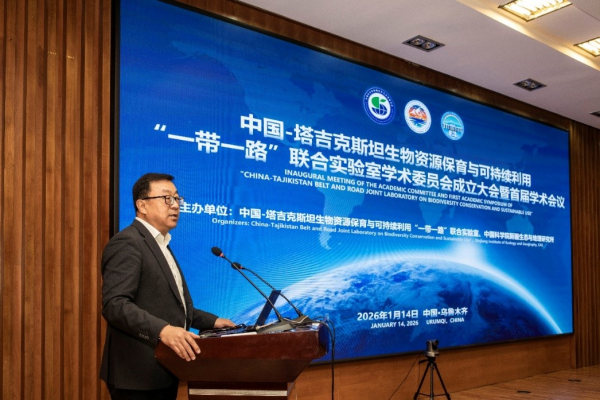
Opening remarks by ZHANG Yuanming
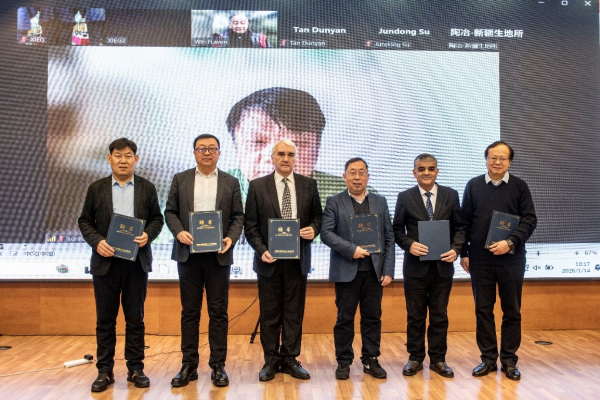
Members of the Academic Committee
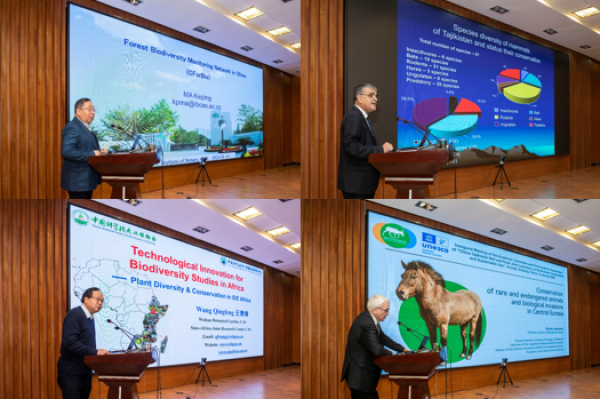
Keynote presentations
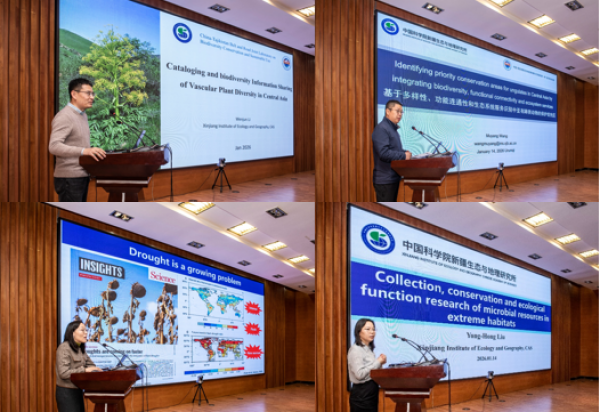
Presentations by young researchers
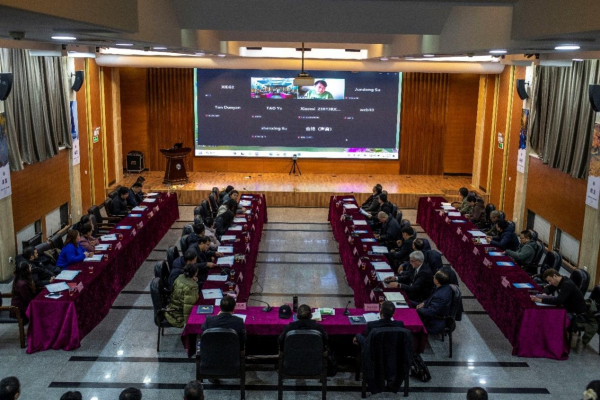
Participants
Contact
LONG Huaping
Xinjiang Institute of Ecology and Geography
E-mail: longhp@ms.xjb.ac.cn
Web: http://english.egi.cas.cn