



XIEG Holds 22nd Public Science Day
2026-05-25
The Xinjiang Institute of Ecology and Geography, Chinese Academy of Sciences (XIEG) successfully held the 22nd Public Science Day seriesof activities from May 14 to 17. The activities took place at multiple venues including the Ili Botanical Garden, Turpan Eremophytes Botanic Garden, Cele National Field Research Station for Desert Steppe Ecosystems and Xinjiang Natural Museum.
The activity “Rare Plants Along the Silk Road-Northern Xinjiang Session” held at the Ili Botanical Garden attracted numerousparticipantsincluding primary and secondary school students and local residents from Xinyuan County, Ili Kazak Autonomous Prefecture and surrounding areas. Researchers guided participants to closely observe several national Class‑II key protected wild plants. Students said the activity let them get close to nature, broadened their scientific horizons, and enhanced their awareness of biodiversity conservation.
A live broadcast ran from 11:00-12:00 on May 17 via People’s Daily Online and other platforms, garnering over one million online viewers. It boosted the botanical garden’s influence and won widespread praise.
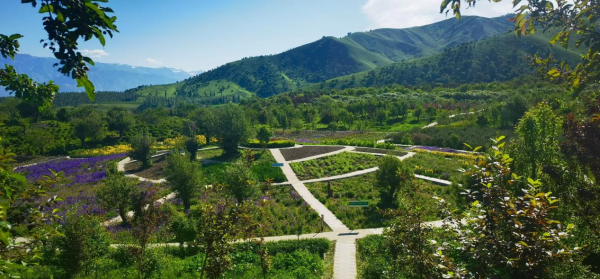
Ili Botanical Garden.
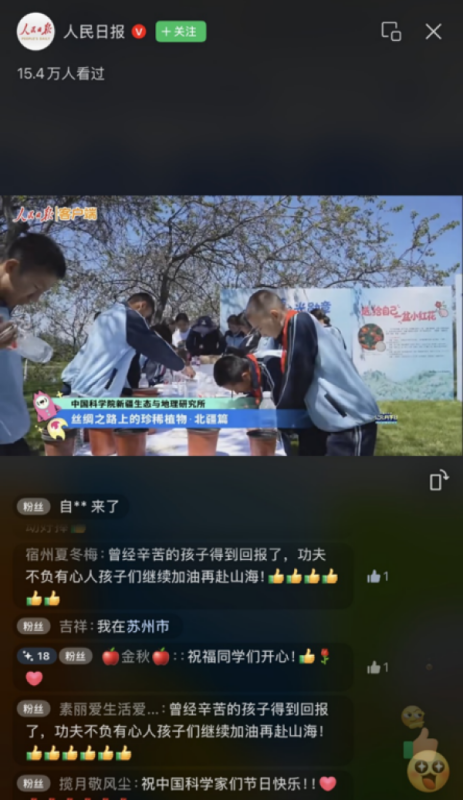
Live broadcast on People’s Daily Online.
The Turpan Eremophytes Botanic Garden hosted themedactivities featuringtwo distinctive native plants, building an immersive science popularization classroom. Students from No.7 Primary School of Gaochang District, Turpan and local residents took part in the event.
Staff guided students to explore the secrets of plant growthand appreciate the charm of native plants through themed sessions. The event also offered fun handicraft activities, such as making tie‑dye artworks with mulberry juice as a natural pigment and experiencing intangible cultural heritage creation of mulberry bark paper.
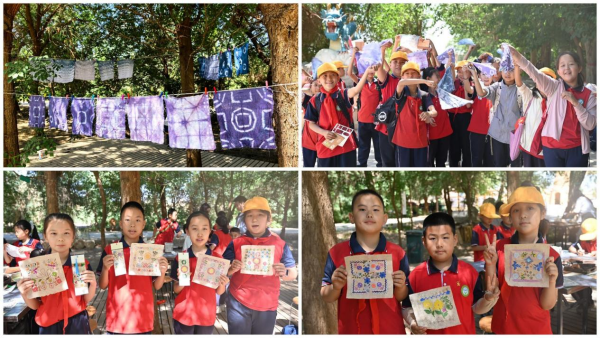
Partial display of on-site works.
At Cele National Field Research Station for Desert Steppe Ecosystems, teachers and students from No.1 Primary School of Cele County conductedscienceexperiments to explore thesand‑fixing capacity of desert plants under researchers’ guidance. Practical operations helped students improve their observation skills and scientific thinking, and deepen their understanding of the vital role of desert plants in oasis preservation.
“Students not only learned to use measuring tapes, vernier calipers and portable soil testers, but also realized the importance of these desert plants in wind prevention, sand fixation and oasis protection. This experienceis more vivid and impressive than textbook knowledge,” commented a teacher from No.1 Primary School of Cele County.
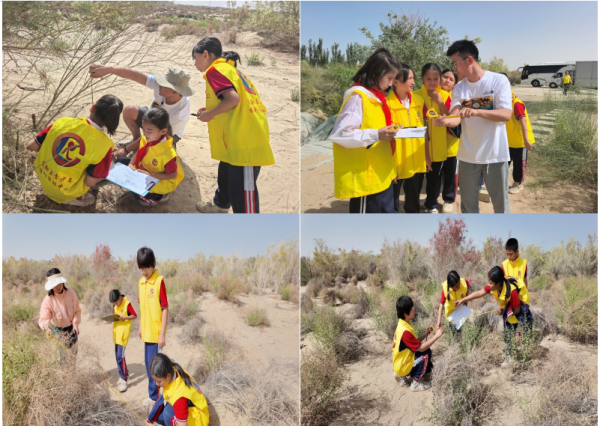
Activities at Cele Station.
The Arid Zone Germplasm Resource Bank launched thefirst Arid‑Zone Biodiversity ConservationSeed Creative Works Competition of Xinjiang. Launched in March 2026, the competition received 475 entriesfrom 37 universities, primary and secondary schools across Xinjiang.
Using seeds as creative carriers to convey germplasm conservation concepts, the competition effectively popularized biodiversity protection knowledge and fostered a favorable social atmosphere encouraging public participation in germplasm resource conservation.
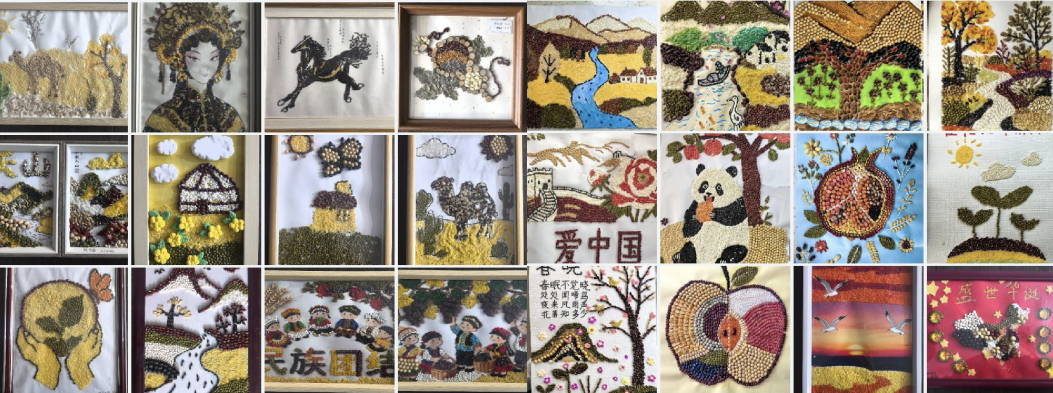
Selected competition entries.
The Xinjiang Natural Museum also actively engaged the public inscience activities. Children gathered around animal and plant specimens, listening to narratorsintroduce the creatures’ survival wisdom and arid‑zone ecology and environment knowledge.
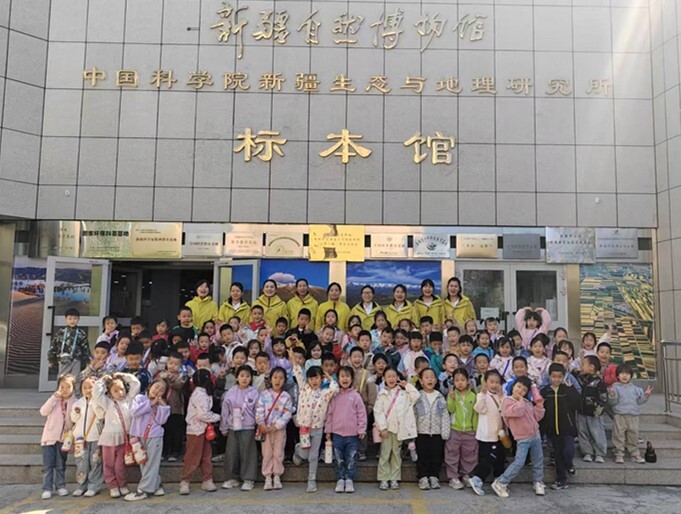
Kindergarten kids participating in activities.
The 22nd Public Science Day activities of XIEG highlighted scientific research and the latest progress, encouraged young people to communicate with researchers, take part in hands‑on experiments, learn about local native plants and strengthen public awareness of the significance of arid‑zone biodiversity conservation.