



Central Asia Experts Gather in Urumqi for Scientific and Technological Cooperation
2026-06-29
On June 26, the first meeting of the Dialogue Mechanism among Leaders of China-Central Asia National Research Institutions was held in Urumqi, serving as a key platform for the scientific and technological cooperation between China and Central Asia with 21 new members joining the Dialogue Mechanism.
Centered on two themes “Open Science for Sustainable Development” and “Deepening Scientific Collaboration for a Resilient Region”, the meeting, hosted by the Xinjiang Institute of Ecology and Geography, Chinese Academy of Sciences (XIEG), attracted over 120 heads of research institutes, academicians, and experts from China and the five Central Asian countries attended and engaged in in-depth exchanges on sci-tech cooperation and regional sustainable development.
HE Hongping, Vice President of the Chinese Academy of Sciences (CAS); Keyiseer Keyoumu, Vice Chairman of the People’s Government of Xinjiang Uyghur Autonomous Region; Aziz Abdukhakimov, Chairman of the National Committee on Ecology and Climate Change of the Republic of Uzbekistan; SUN Weidong, Secretary-General of the Secretariat of China-Central Asia Cooperation Mechanism; and Ilhom Amonzoda, Vice President of the National Academy of Sciences of Tajikistan, attended the meeting and delivered keynote speeches at the opening ceremony.
They all agreed that sci-tech collaboration serves as a core driving force for building a closer China-Central Asia community with a shared future and enhancing regional resilience, and endorsed the Dialogue Mechanism as a vital and visionary platform for translating scientific achievements into practical solutions to common regional challenges, including ecological risks, climate change, water scarcity and environmental degradation.
HE Hongping stated that under this Dialogue Mechanism, CAS will strengthen policy alignment with all partners, consolidate cooperation consensus, boost knowledge sharing and capacity building, and strive to make the mechanism the most dynamic sci-tech cooperation platform under the China-Central Asia Mechanism.
SUN Weidong noted that the Secretariat of China-Central Asia Cooperation Mechanism will continue to provide full support to advance the mechanism steadily.
Ilhom Amonzoda put forward six priority areas for cooperation: developing regional monitoring systems for climate, glaciers and water resources; establishing joint laboratories; exchanging scientific data and innovative technologies; conducting joint research on climate change and ecology; supporting academic exchanges and young scientist training; and applying digital technologies and artificial intelligence to ecological and environmental research.
This inaugural meeting holds profound strategic and practical significance. It consolidated the foundation of China-Central Asia scientific and technological partnership, innovated the model of Belt and Road scientific cooperation, turned bilateral and multilateral cooperation intentions into concrete project achievements, and provided solid scientific and technological support for regional ecological security, green transformation and high-quality development.
Looking ahead, with support from the CAS, the Secretariat of China-Central Asia Cooperation Mechanism, and participating institutions, the Dialogue Mechanism will continue to expand cooperation and deepen regional scientific collaboration. It will mobilize resources to jointly tackle ecological and development challenges, enhance cross-border exchanges and talent training, and support sustainable development, contributing to a closer China-Central Asia community with a shared future.
During the meeting, 16 institutions jointly initiated and established the International Science Data Alliance (ISDA), and the first flagship project of the mechanism was launched.
On September 19, 2023, XIEG, together with 28 national research institutions from China and Central Asia, issued the initiative “Forge Synergies for Development, Jointly Build a Beautiful Silk Road” and jointly established the Dialogue Mechanism among Leaders of China-Central Asia National Research Institutions. This achievement was listed in the multilateral cooperation outcomes of the Third Belt and Road Forum for International Cooperation.
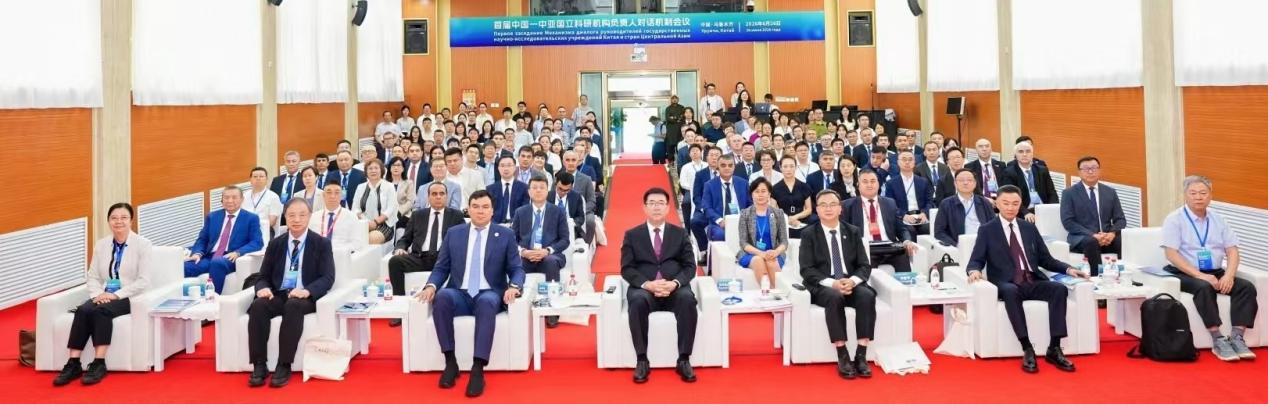
Group Photo. (Image by XIEG)
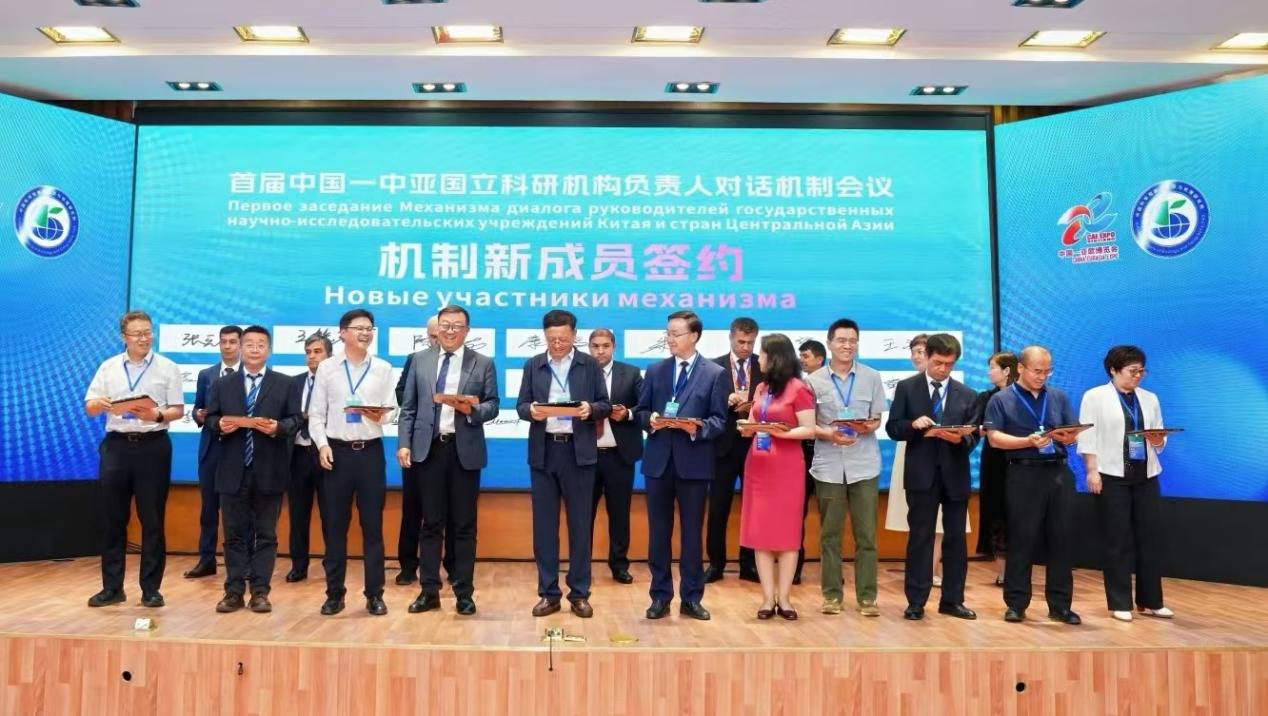
Signing ceremony for the admission of new members under the Dialogue Mechanism. (Image by XIEG)
Contact
HUANG
Xinjiang Institute of Ecology and Geography
E-mail: zlhuang@ms.xjb.ac.cn