



Study Reveals the Unseen World of Soil Nematodes in Earth's Most Extreme Ecosystems
2026-06-02
A research team led by Prof. ZENG Fanjiang from the Xinjiang Institute of Ecology and Geography, Chinese Academy of Sciences (XIEG), has revealed common adaptation patterns and region-specific characteristics of desert nematodes.The findings were published in Earth-Science Reviewson March 28, 2026.
Desert nematodes can survive extended periods of desiccation through anhydrobiosis and cryptobiosis, physiological states characterized by metabolic arrest and cellular stabilization. Nematodes are highly sensitive to humidity, organic matter availability, and disturbance, thus showing great potential as biological indicators for assessing soil degradation, restoration effectiveness, and ecosystem resilience in deserts.
To develop a coherent and integrated synthesis linking nematode diversity, adaptation strategies, and desert ecosystem functions, the researchers followed the PRISMA guidelines,conducted a global synthesis of research, and mainly focused on three themes: nematode diversity and distribution; drought adaptation strategies; and the effects of nematode trophic functions on carbon and nitrogen cycling and plant-soil feedbacks.
Through qualitative meta-analysis, the study found that although desert nematodes are far less abundant and diverse than those in temperate forest or tundra soils, they have evolved remarkable extreme survival ability: by entering anhydrobiosis and cryptobiosis, nematodes can tolerate near-complete water loss, extreme heat, freezing, and even high salinity; they accumulate trehalose and induce heat shock proteins and late embryogenesis abundant (LEA) proteins, achieving cellular vitrification, which enables them to rapidly revive after months or even years of drought.
In terms of ecological functions, by grazing on bacteria and fungi, nematodes accelerate the mineralization and turnover of scarce carbon and nitrogen in desert soils, particularly after rare rainfall events, rapidly activating the “microbial loop” and facilitating plant nutrient acquisition.
Furthermore, nematode community structure sensitively reflects soil health, degradation status, and restoration effectiveness, making nematodes ideal bioindicators for desert ecosystems.
“The current research faces three major critical limitations: taxonomic bottlenecks, geographical bias,and insufficient functional integration. Standardized cross-desert surveys, integrated morphological and molecular identification frameworks, and the incorporationof nematode indicators in desertification management policies are urgently required for future research,” said Associate Prof. Waqar Islam, first and corresponding author of the study.
Read the full article: https://doi.org/10.1016/j.earscirev.2026.105482
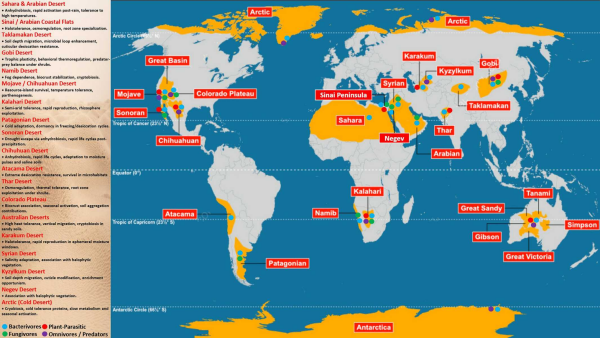
Fig. 1.Overview of nematode diversity, distribution and adaptations in desert regions. (Image by XIEG)
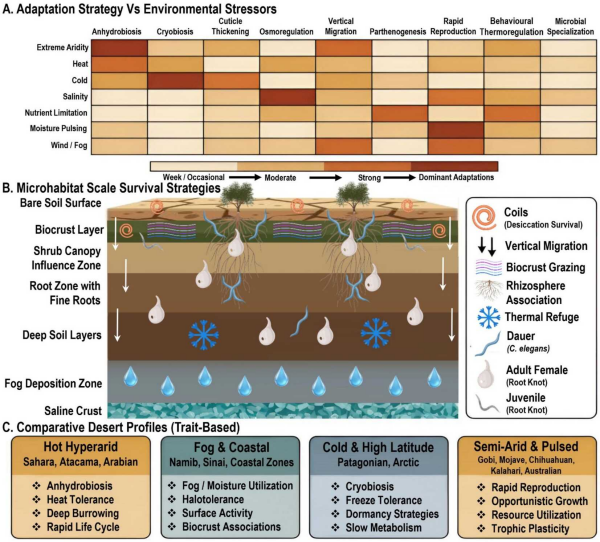
Fig. 2. Nematode Adaptations and Functional Traits across Desert Ecosystems. (Image by XIEG)
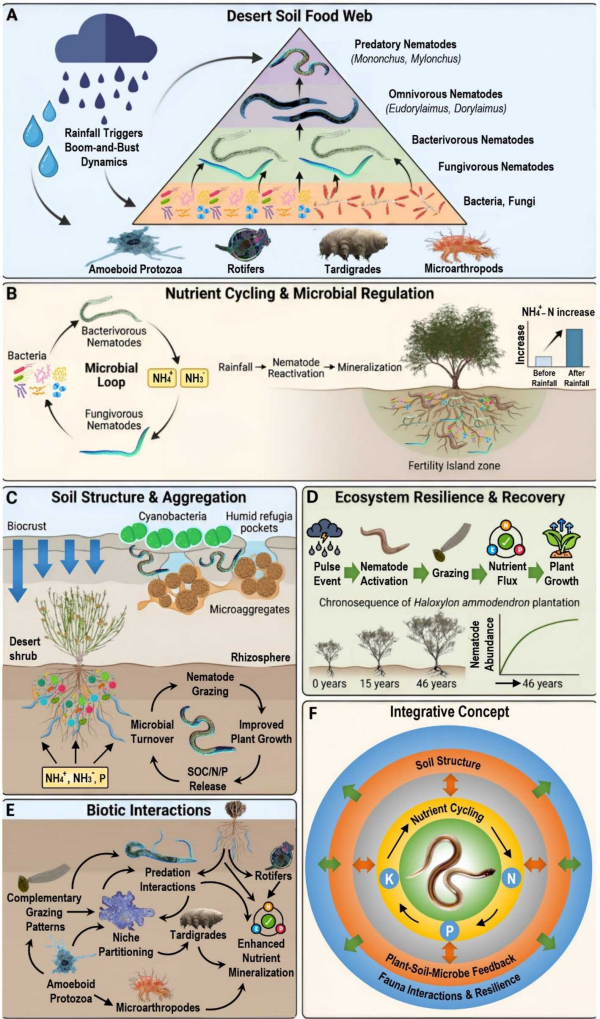
Fig. 3.Ecological roles of nematodes in desert ecosystems: drivers of nutrient cycling, soil structure, and ecosystem resilience. (Image by XIEG)
Contact
Waqar Islam
Xinjiang Institute of Ecology and Geography
E-mail: waqarislam@ms.xjb.ac.cn