



New Framework Shows Expanding Ecological Decline Across Asian Drylands
2026-09-03
A research team led by Prof. ZENG Fanjiang and Associate Prof. Akash Tariq from the Xinjiang Institute of Ecology and Geography, Chinese Academy of Sciences (XIEG), has proposed a new ecosystem health framework to track long-term, consistent ecological changes across Asian drylands. The study was published in Earth’s Future on August 2, 2026.
Ecosystem health is a critical indicator of land sustainability, yet long-term regional assessments across Asian drylands have remained fragmented and temporally inconsistent. Previous studies have largely examined individual components of the system, including climate variability, water resources, and vegetation dynamics, but have failed to capture continuous, year-to-year ecosystem dynamics. This gap has hindered the ability to track progress, compare regional trajectories, and identify emerging ecological risks, particularly as restoration and land degradation neutrality initiatives increasingly demand spatially explicit and temporally consistent evidence.
To address this, the research team developed an integrated ecosystem health framework that enables annual tracking of ecosystem health (EH) across Asian drylands from 2000 to 2020. This approach combines land use, key biophysical indicators including vegetation dynamics and soil moisture, and landscape spatial configuration to provide a temporally consistent and spatially explicit assessment of ecosystem health dynamics.
The study reveals that ecosystem health across Asian drylands declined steadily until 2012, followed by a partial, spatially uneven recovery after 2014. Despite this improvement, poor ecosystem health areas expanded by 2.1% or 58 million hectares (Mha) since 2000, while healthy ecosystems declined and accounted for only 2% or 7.9 Mha of the region by 2020. By the end of the study period, areas classified as poor and relatively poor together comprised approximately 74% of the region.
A key finding is the significant disparity between regions, with Central Asia, particularly Kazakhstan, showing continued degradation throughout the study period with the lowest mean ecosystem health values, whereas Dryland East Asia, represented by China’s Gansu, Ningxia, and Inner Mongolia provinces, exhibited partial recovery.
The study identifies land-use change as the dominant driver, affecting 4.9% or 42.87 Mha of the region between 2000 and 2020. Climatic conditions further contributed to these drivers, as post-2013 warming coincided with increased soil moisture stress in Central Asia, while higher precipitation supported ecohealth recovery in East Asia drylands.
The study proposes an ecosystem health-centered framework emphasizing prevention, adaptation, and restoration, supported by continuous monitoring. “This framework not only provides a systematic academic paradigm but also offers clear decision-making support for regional land managers and international cooperation bodies,” said Dr. Sikandar Ali, first author of the study.
Through comprehensive integration of multi-source remote sensing data, the study details ecosystem health status and identifies dominant drivers of change, thereby furnishing robust data and theoretical support for land-use planning, restoration strategies, and sustainability policies across Asian drylands.
Read the full article: https://doi.org/10.1029/2026EF008098
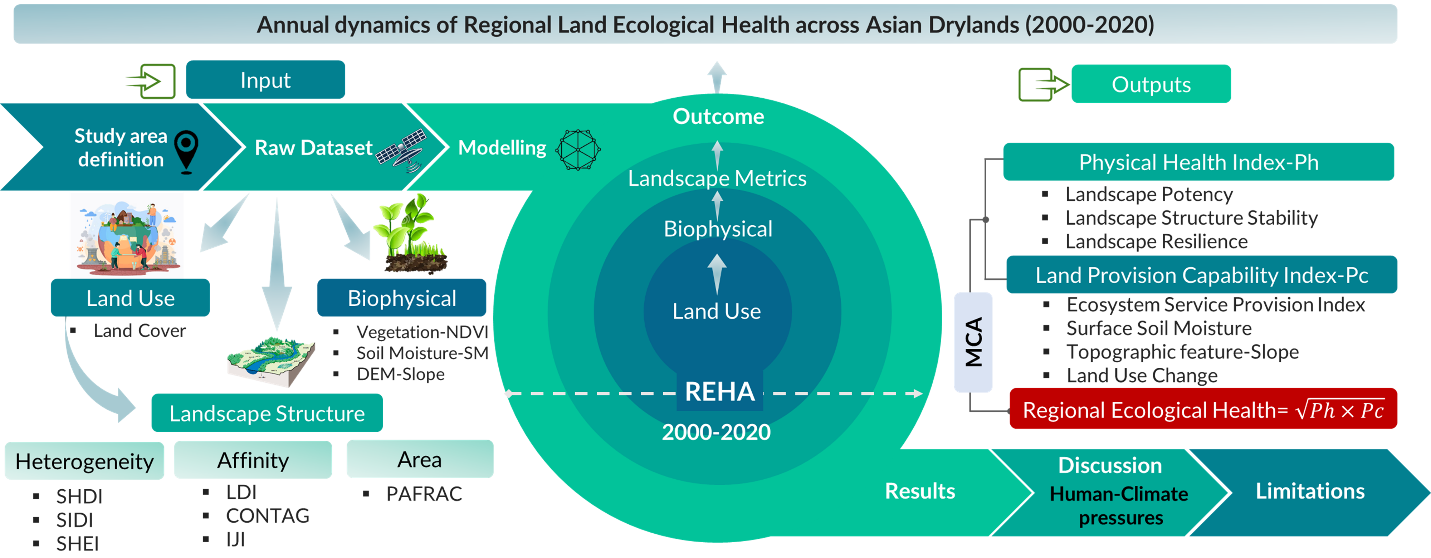
Fig.1. The simplified conceptual schema adopted in this study. (Image by XIEG)
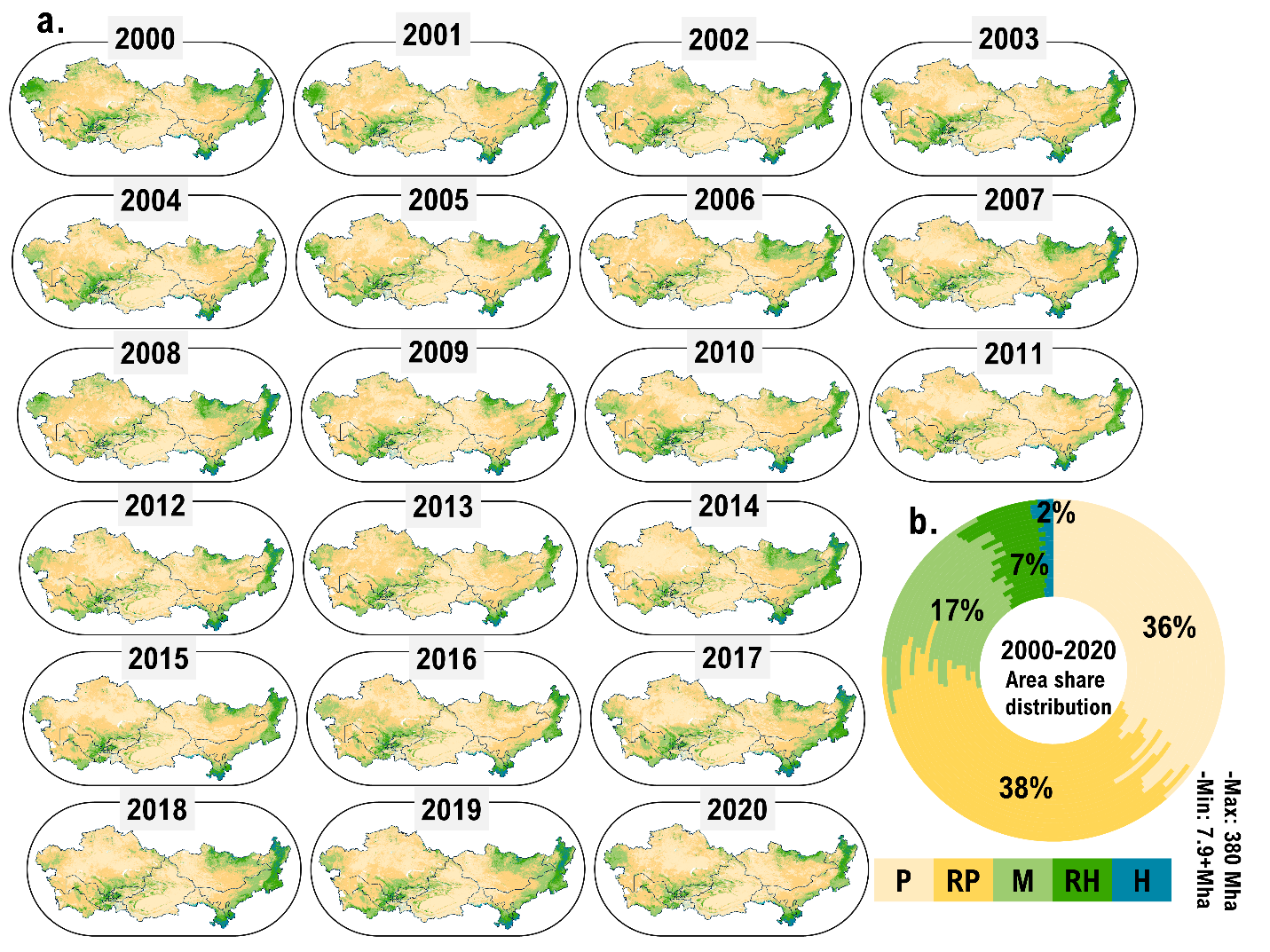
Fig.2. (a) Long‐term spatial trends (2000-2020) in ecosystem health (EH) and (b) area share distribution by EH classes: P (Poor), RP (Relatively Poor), M (Moderate), RH (Relatively Healthy), H (Healthy). (Image by XIEG)
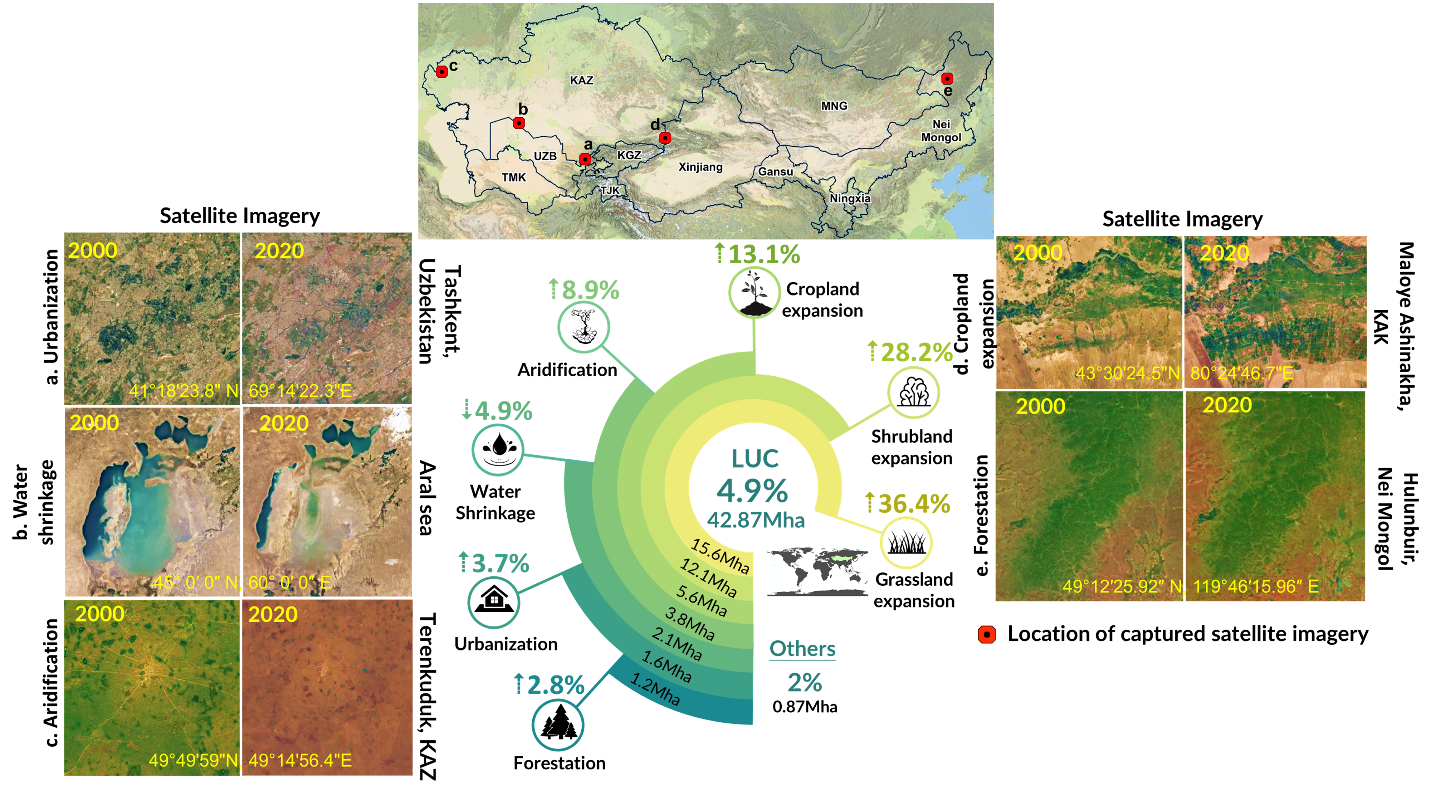
Fig.3. Gross proportion of regional land‐use change (LUC) across Asian Drylands (AD), derived from dominant transition areas (2000–2020). (Image by XIEG)
Contact:
ZENG Fanjiang, Akash Tariq
Xinjiang Institute of Ecology and Geography
Email: zengfj@ms.xjb.ac.cn