



XIEG Invites You to Apply for 2026 Distinguished Young Scholars Fund (Overseas)
2026-04-10
1. Institution Introduction
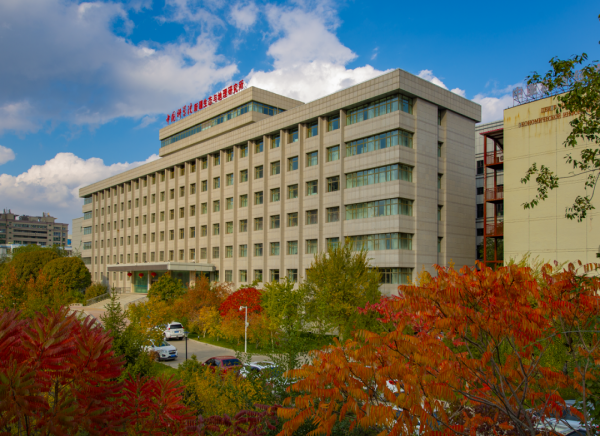
The Xinjiang Institute of Ecology and Geography (hereinafter referred to as XIEG) of the Chinese Academy of Sciences (CAS) was established on July 7, 1998, by merging Xinjiang Institute of Biology, Pedology and Desert Research (established in 1961) and Xinjiang Institute of Geography (established in 1965) of the CAS.
XIEG is oriented towards the international frontiers in the field of arid zone ecology and environment, towards the major needs of China’s construction of the Silk Road Economic Belt, and towards the overall goal of Xinjiang’s long-term peace and stability. The institute focuses on research and demonstration projects concerning natural resource development, ecological restoration, environmental governance, biodiversity conservation, and sustainable development, playing an irreplaceable leading role in the field of ecology and environment of arid zones in central Asia.
XIEG hosts several national-level platforms, including the State Key Laboratory of Ecological Safety and Sustainable Development in Arid Lands (the only national-level key laboratory in Xinjiang), the Research Center for Biodiversity Conservation in Arid Lands, the Ili-Turpan National Botanical Garden (one of 14 candidate national botanical gardens), and the National Engineering Technology Research Center for Desert-Oasis Ecological Construction. The institute has established 12 field research stations (including three national stations) and has established 19 ecological monitoring stations across Central Asia, Iran, and Mongolia, creating new platforms for international cooperation in Central Asia to support the Belt and Road initiative.
For over sixty years, XIEG has achieved remarkable results in the field of arid zone resources and environment, and has received nearly 400 national, international, and provincial-level awards. In basic research, studies on water resources in Northwest China have been recognized as a landmark achievement of the CAS "Pioneer Initiative." Research on biodiversity conservation supports regional ecological security and green development. Studies on Central Asian accretionary orogeny have achieved technological integration and demonstration. In technological breakthroughs, achievements in desertification control and ecological restoration have been extended to Central Asia and Africa. High-yield cotton technology has set a world record for "three consecutive highest yields" and was selected as one of China's top ten scientific and technological advances in 2001. The successful application for the Tianshan UNESCO World Heritage site has significantly boosted Xinjiang's tourism industry. In international cooperation, XIEG has been approved to establish the China-Tajikistan Belt and Road Joint Laboratory on Biodiversity Conservation and Sustainable Use, built dialogue mechanisms among Central Asian research institutions, and solidified its position as a "bridgehead" for technological cooperation in Central Asia.
2. Research Areas
Water cycle and water resource security in arid lands
Desertification processes and ecological barrier construction in arid lands
Human-environment relationships and sustainable development in arid lands
Biodiversity conservation and sustainable use in arid lands
Mineral resources and big data, among others
3. Fund Description
The Distinguished Young Scholars Fund (Overseas) aims to attract and encourage outstanding young scholars working overseas who have achieved notable results in natural sciences, engineering, and technology to return to (or come to) China for work. It allows them to choose their own research directions and conduct innovative research, thereby promoting the rapid growth of young scientific and technological talent, cultivating a group of excellent academic leaders poised to reach the forefront of world science and technology.
3.1 Eligibility Requirements
(1) Comply with the laws and regulations of the People's Republic of China, uphold good scientific ethics, and consciously practice the spirit of scientist in the new era.
(2) Born on or after January 1, 1986.
(3) Hold a PhD degree.
(4) Primary research direction primarily in natural sciences, engineering technology, etc.
(5) By June 15, 2026, generally have held a formal teaching or research position at an overseas university, research institution, or corporate R&D facility for 36 consecutive months or more after obtaining the Ph.D. degree. For those who obtained their Ph.D. overseas with particularly outstanding performance, the work experience requirement may be appropriately relaxed.
(6) Have achieved research or technological outcomes recognized by peers and demonstrate potential to become an academic leader or outstanding talent in their field.
(7) Applicants must not have returned (or come) to China for full-time work yet, or must have returned (or come) to China for full-time work after January 1, 2025. Upon receiving funding notification, they must resign from overseas positions and return (or come) to China for full-time work for no less than three years.
3.2 Restrictions
Applicants shall comply with the relevant requirements on the overall coordination and alignment of national science and technology talent programs. Individuals may undertake only one program at the same level and are not permitted to apply for lower-level programs.
4. Position and Benefits
(1) Salary: no less than RMB 500,000 per year.
(2) Successful candidates will be directly appointed as professors and granted graduate student supervisor qualifications.
(3) Research start-up funding: RMB 4 to 12 million (including matching funds from various sources).
(4) Living allowance: RMB 1.5 to 1.8 million (including relocation allowance).
(5) Temporary apartment for housing.
(6) Assistance with children's enrollment in prestigious kindergartens, primary schools, and middle schools in the Xinshi District of Urumqi.
5. Contact Information
1. Employment and Policy Inquiries
Contact: LIU Xiang, Human resources Office, XIEG
Phone: 86-991-7885503 / 86-13201256897
Email: liuxiang@ms.xjb.ac.cn
2. Fund Application Inquiries
Contact: LIU Lu, Research Office, XIEG
Phone: 86-991-7885315
Email: liulu@ms.xjb.ac.cn